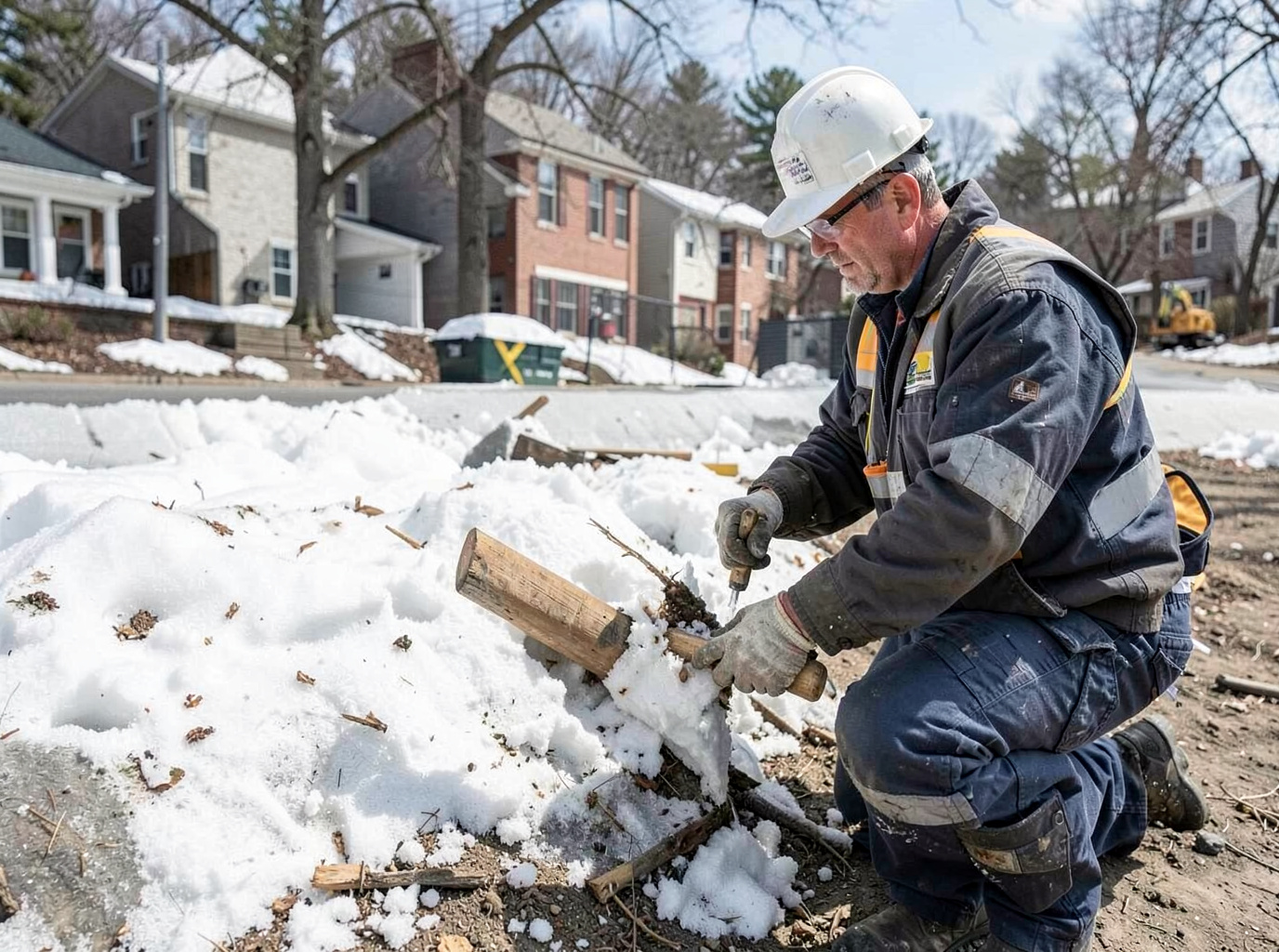
Woodbury's humid continental climate brings repeated freeze-thaw cycles that turn roof snow into ice dams, especially on homes in Central Woodbury and near Tannerwood Park where many roofs date from the 1980s and 1990s. Poor attic ventilation and insulation gaps allow warm air to melt snow at the eaves, creating dams that back water under shingles and into living spaces. We focus on steam removal that clears ice without damaging shingles, followed by targeted fixes that match the actual construction details found on split-levels and two-stories common in Washington County.
Nearby St. Paul and Cottage Grove share the same winter wind patterns that pile snow on north-facing slopes, but Woodbury's slightly higher elevation and tree cover around Woodbury Village can trap moisture longer once a dam forms. Homeowners often notice leaks first at skylights or valleys after a January thaw. Our approach includes checking soffit intake and ridge exhaust on every job because blocked vents are the most frequent reason dams reform the following week.
Prevention work here centers on adding baffles and sealing attic bypasses rather than blanket heat cable runs. We see the biggest improvement when insulation is brought up to current Washington County energy code levels around penetrations, which reduces the temperature differential that starts the cycle. This method keeps water out without relying on constant energy use through the long cold season.
Technician insight
In Woodbury, the thing that catches most people out with Ice Dam Removal & Prevention is how 1980s and 1990s homes around Tannerwood Park lose heat through unsealed can lights and bathroom fans, so the dams keep coming back even after we clear the ice.
Central Woodbury Split-Level Leak
After a mid-January thaw, water appeared along the living-room ceiling of a 1992 split-level near Tannerwood Park. We found a six-foot ice dam at the north valley where attic insulation had settled around recessed lights. Steam cleared the dam in one visit; we added baffles and sealed the bypasses so the homeowner stayed dry through the rest of the winter.
Ice Dam Removal & Prevention Services We Offer
✓Steam Ice Dam Removal
Controlled steam application melts ice dams at the eaves without cutting or prying shingles, protecting asphalt and metal roofs common in Tannerwood.
✓Attic Heat Loss Inspection
Infrared scan and visual check of insulation, baffles, and penetrations to locate the warm spots that cause ice dams in Central Woodbury homes.
✓Ridge Vent and Soffit Clearing
Removal of debris and insulation blockage from ridge and soffit vents to restore airflow and reduce the temperature difference that forms dams.
✓Heat Cable Installation
Self-regulating cable placed along valleys and eaves to maintain a melt path during prolonged cold snaps typical of Washington County winters.
✓Gutter and Downspout Heat Tracing
Low-wattage tracing installed in gutters and leaders to keep meltwater moving away from the roof edge before it refreezes.
Ice Dam Removal & Prevention Cost in Woodbury, MN
| Service | Typical Range | What Affects It |
|---|---|---|
| Steam Ice Dam Removal | $250–$650 | Varies with roof height, number of dams, and access from Tannerwood or Central Woodbury streets |
| Attic Inspection and Report | $125–$200 | Includes infrared scan; credited toward prevention work if scheduled same day |
| Heat Cable Installation | $400–$900 | Per linear foot plus controller; higher on two-story homes near Woodbury Village |
| Ridge and Soffit Restoration | $300–$550 | Covers clearing and baffle additions on typical 1980s–1990s Woodbury roofs |
Ranges are typical for Woodbury, MN and confirmed with an exact written quote before any work starts.
How it works
- 1
On-Site Assessment
We inspect the roof, attic, and gutters from Woodbury Village to Tannerwood Park to map every dam and identify heat-loss points.
- 2
Steam Removal
Steam wands clear ice from the roof surface while protecting shingles and flashing on the affected slopes.
- 3
Vent and Insulation Corrections
We clear blocked soffits, add baffles, and seal bypasses to stop the warm-air leaks that restart the dam cycle.
- 4
Prevention Follow-Up
Optional heat cable or tracing is installed where repeated dams have occurred, with a final walkthrough before we leave.
Pricing
Upfront quotes after inspection; ranges reflect roof access, number of dams, and whether prevention work is added.